Lighting is an essential aspect of any home, but it can also be a significant source of energy consumption.
Eco-friendly lighting options not only help reduce your carbon footprint but also enhance the ambiance of your living spaces.
In this comprehensive guide, we will explore various eco-friendly lighting options, their benefits, and how to implement them effectively in your home.
We’ll also include practical tips, expert opinions, and real-life examples to help you make the best choices for your eco-friendly home.
Table of Contents
- Understanding Eco-Friendly Lighting
- Types of Eco-Friendly Lighting Options
- LED Lighting
- CFL Lighting
- Smart Lighting Systems
- Solar-Powered Lighting
- Natural Lighting Enhancements
- Comparative Analysis: LED vs. CFL vs. Traditional Bulbs
- Design Tips for Eco-Friendly Lighting
- Case Studies: Eco-Friendly Lighting in Action
- Expert Opinions on Sustainable Lighting
- Practical Tips for Implementing Eco-Friendly Lighting
- Conclusion: Illuminating Your Path to Sustainability
1. Understanding Eco-Friendly Lighting

What is Eco-Friendly Lighting?
Eco-friendly lighting refers to lighting solutions that consume less energy, have a longer lifespan, and reduce environmental impact compared to traditional lighting methods.
These options often utilize advanced technologies or renewable energy sources to provide illumination while minimizing waste and pollution.
Benefits of Eco-Friendly Lighting:
- Energy Efficiency: Uses significantly less electricity compared to traditional lighting.
- Cost Savings: Lower energy consumption leads to reduced electricity bills.
- Longevity: Longer lifespan means fewer replacements and less waste.
- Environmental Impact: Reduces greenhouse gas emissions and reliance on fossil fuels.
2. Types of Eco-Friendly Lighting Options
2.1 LED Lighting
Overview:
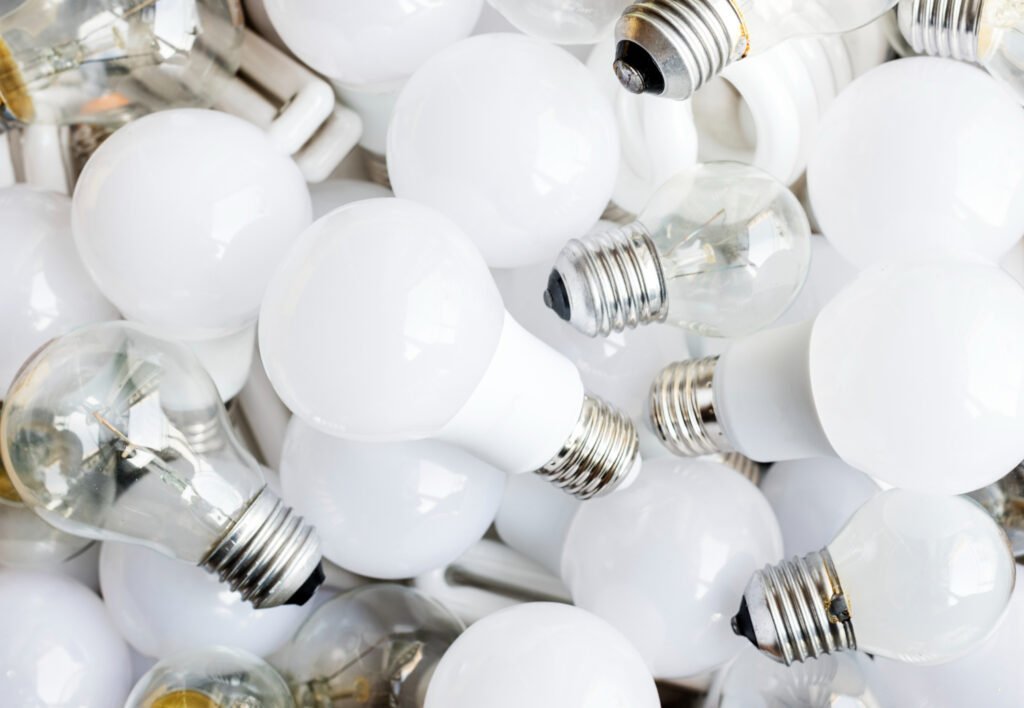
- Light Emitting Diodes (LEDs): LEDs are semiconductor devices that emit light when an electric current passes through them.
- Energy Efficiency: LEDs use about 75% less energy than incandescent bulbs.
- Lifespan: Can last up to 25,000 hours, significantly longer than traditional bulbs.
Benefits:
- Durability: Resistant to breakage and vibrations.
- Instant On: Provides full brightness instantly without warm-up time.
- Variety: Available in various colors and brightness levels.
Example:
Anna replaced all her home’s incandescent bulbs with LED bulbs. She noticed an immediate drop in her electricity bill and appreciated the bright, clear light provided by the LEDs.
2.2 CFL Lighting
Overview:
- Compact Fluorescent Lamps (CFLs): CFLs are designed to replace incandescent bulbs and use a coiled tube to produce light.
- Energy Efficiency: Uses about 70% less energy than incandescent bulbs.
- Lifespan: Lasts about 8,000 hours, longer than traditional bulbs but shorter than LEDs.
Benefits:
- Cost-Effective: Less expensive than LEDs while still offering energy savings.
- Versatility: Available in a variety of shapes and sizes to fit different fixtures.
Example:
Mark opted for CFLs in his apartment due to their affordability and energy savings. He found them to be a good intermediate step toward full energy efficiency.
2.3 Smart Lighting Systems
Overview:
- Smart Bulbs and Fixtures: Connected lighting systems that can be controlled via smartphone apps, voice commands, or automation.
- Energy Efficiency: Allows for precise control over lighting, reducing unnecessary usage.
- Customization: Offers adjustable brightness, color, and scheduling.
Benefits:
- Convenience: Control your lights remotely and set schedules to match your lifestyle.
- Integration: Can be integrated with other smart home devices for a cohesive system.
Example:
Jane installed smart lighting in her home, allowing her to set schedules and control the lights remotely. She particularly enjoyed setting different moods with adjustable colors and brightness levels.
2.4 Solar-Powered Lighting
Overview:
- Solar Lighting: Utilizes solar panels to capture sunlight and convert it into electricity for lighting.
- Energy Efficiency: Completely powered by renewable energy, reducing electricity bills.
- Applications: Ideal for outdoor lighting, such as garden lights, pathway lights, and security lights.
Benefits:
- Renewable Energy: Reduces reliance on grid electricity.
- Independence: Can be installed in areas without access to electrical outlets.
Example:
Tom and Nancy installed solar-powered garden lights along their walkway. They loved the fact that these lights charged during the day and provided illumination at night without any additional electricity costs.
2.5 Natural Lighting Enhancements
Overview:
- Maximizing Daylight: Utilizing design and architectural elements to increase natural light in your home.
- Energy Efficiency: Reduces the need for artificial lighting during daylight hours.
- Health Benefits: Natural light can improve mood and productivity.
Benefits:
- Cost Savings: Less reliance on artificial lighting reduces electricity bills.
- Aesthetics: Creates a bright, welcoming atmosphere in your home.
Example:
Laura added skylights and larger windows to her living room, flooding the space with natural light. She enjoyed the energy savings and the enhanced ambiance of her home.
3. Comparative Analysis: LED vs. CFL vs. Traditional Bulbs
| Feature | LED Bulbs | CFL Bulbs | Incandescent Bulbs |
|---|---|---|---|
| Energy Efficiency | High (75% less than incandescent) | Moderate (70% less than incandescent) | Low |
| Lifespan | Up to 25,000 hours | Up to 8,000 hours | Up to 1,200 hours |
| Cost | Higher upfront, lower over time | Moderate upfront | Low upfront, higher over time |
| Environmental Impact | Low (due to efficiency and lifespan) | Moderate (contains small amounts of mercury) | High (due to energy use and frequent replacement) |
| Brightness Options | Wide range | Moderate range | Limited range |
| Heat Emission | Low | Moderate | High |
| Durability | High (resistant to breakage) | Moderate (fragile tube) | Low (easily breakable) |
Summary:
- LED Bulbs: Best overall for energy efficiency, lifespan, and durability.
- CFL Bulbs: Good intermediate option, more affordable than LEDs but with shorter lifespan and higher environmental impact.
- Incandescent Bulbs: Least efficient and shortest lifespan, not recommended for eco-friendly lighting.
4. Design Tips for Eco-Friendly Lighting
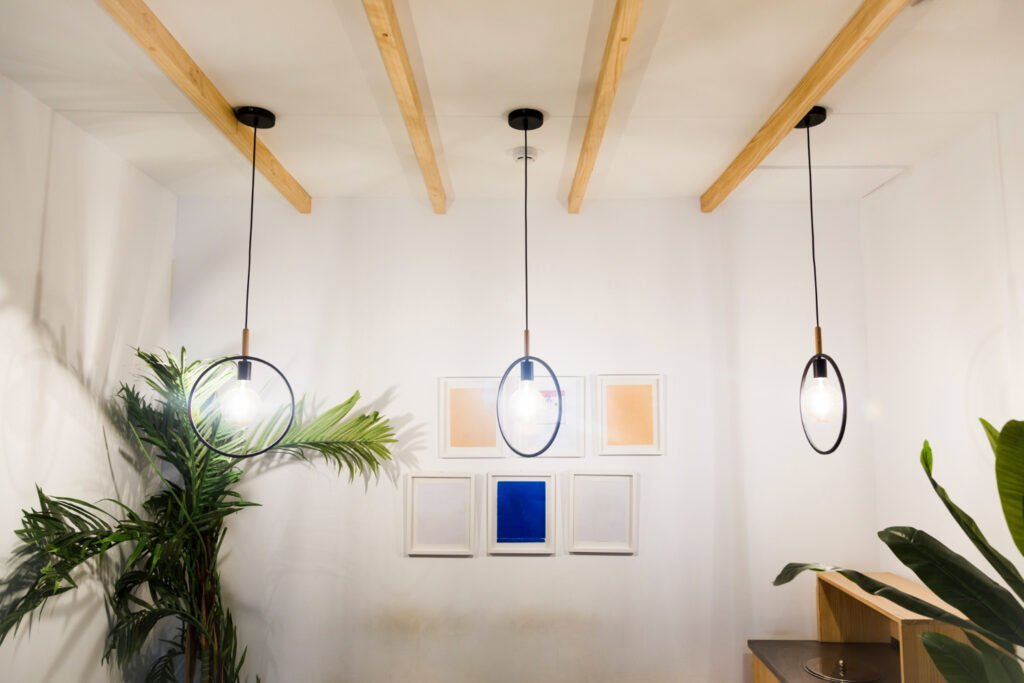
4.1 Layered Lighting
- Ambient Lighting: Provides overall illumination for a room. Use energy-efficient fixtures like LED ceiling lights or CFL chandeliers.
- Task Lighting: Focuses on specific areas where activities are performed. Examples include LED desk lamps or under-cabinet lights in the kitchen.
- Accent Lighting: Highlights architectural features or decor. Consider solar-powered spotlights or smart LED strips.
4.2 Use Dimmers and Sensors
- Dimmers: Install dimmer switches to adjust brightness levels according to your needs, reducing energy consumption.
- Motion Sensors: Use motion sensors in areas like hallways, bathrooms, and closets to ensure lights are only on when needed.
4.3 Maximize Natural Light
- Window Treatments: Use sheer curtains or blinds that allow natural light to filter in while maintaining privacy.
- Reflective Surfaces: Incorporate mirrors and light-colored walls to reflect natural light and brighten up the space.
4.4 Outdoor Lighting
- Solar Lights: Perfect for gardens, walkways, and driveways. They charge during the day and illuminate at night.
- LED Fixtures: Use energy-efficient LED floodlights for security and landscape lighting.
5. Case Studies: Eco-Friendly Lighting in Action
Case Study 1: The Smith Family Home
- Project: Whole-house lighting upgrade to improve energy efficiency.
- Solution: Replaced all incandescent bulbs with LED bulbs, installed smart lighting controls, and added solar-powered outdoor lights.
- Outcome: The Smith family reduced their energy consumption by 60% and noticed significant savings on their electricity bills.
Case Study 2: Green Office Renovation
- Project: Office renovation with a focus on sustainability.
- Solution: Implemented a combination of LED lighting, smart lighting systems, and natural light enhancements (skylights and larger windows).
- Outcome: The office environment became more energy-efficient, with improved lighting quality and employee productivity.
Case Study 3: Eco-Friendly Garden
- Project: Transforming a garden space with sustainable lighting.
- Solution: Installed solar-powered garden lights and LED string lights for ambiance.
- Outcome: The garden became a beautifully lit space for evening relaxation, all powered by renewable energy.
6. Expert Opinions on Sustainable Lighting
Expert Opinion 1: John Green, Lighting Designer
“LED lighting is the future of eco-friendly illumination. Its energy efficiency, long lifespan, and versatility make it the best choice for both residential and commercial applications.”
Expert Opinion 2: Emily White, Sustainable Living Advocate
“Incorporating natural light into your home design is one of the simplest and most effective ways to reduce energy consumption. Skylights, larger windows, and reflective surfaces can make a huge difference.”
Expert Opinion 3: Sarah Johnson, Smart Home Specialist
“Smart lighting systems offer unparalleled convenience and energy savings. The ability to control and automate your lighting ensures you’re using only what you need, when you need it.”
7. Practical Tips for Implementing Eco-Friendly Lighting
Tip 1: Start Small
- Begin by replacing the most frequently used bulbs with LED alternatives. Focus on high-traffic areas like the kitchen, living room, and bathroom.
Tip 2: Use Natural Light
- Make the most of natural daylight by opening curtains and blinds during the day. Consider installing skylights or light tubes to brighten darker areas.
Tip 3: Invest in Smart Lighting
- Smart bulbs and systems can be controlled remotely, scheduled, and even synced with other smart home devices, providing both convenience and energy savings.
Tip 4: Outdoor Lighting
- Opt for solar-powered lights for your garden and pathways. They are easy to install and require no additional electricity.
Tip 5: Regular Maintenance
- Clean your light fixtures regularly to ensure maximum brightness and efficiency. Dust and dirt can reduce the effectiveness of your lighting.
Tip 6: Educate Your Family
- Make sure everyone in your household understands the importance of turning off lights when they’re not needed and using energy-efficient options.
Conclusion: Illuminating Your Path to Sustainability
Choosing eco-friendly lighting options for your home is a straightforward yet impactful way to reduce your carbon footprint, save on energy costs, and create a healthier living environment.
From LED and CFL bulbs to smart lighting systems and solar-powered options, there are numerous ways to make your home more sustainable.
By understanding the benefits and drawbacks of each option, implementing thoughtful design strategies, and taking inspiration from real-life examples, you can successfully transform your home’s lighting into an eco-friendly, efficient, and stylish system.
Remember, every small change contributes to a larger impact on our planet, so start with what you can and continue to make sustainable choices.
If you found this guide helpful, share it with your friends and family. Together, we can light the way to a more sustainable future.